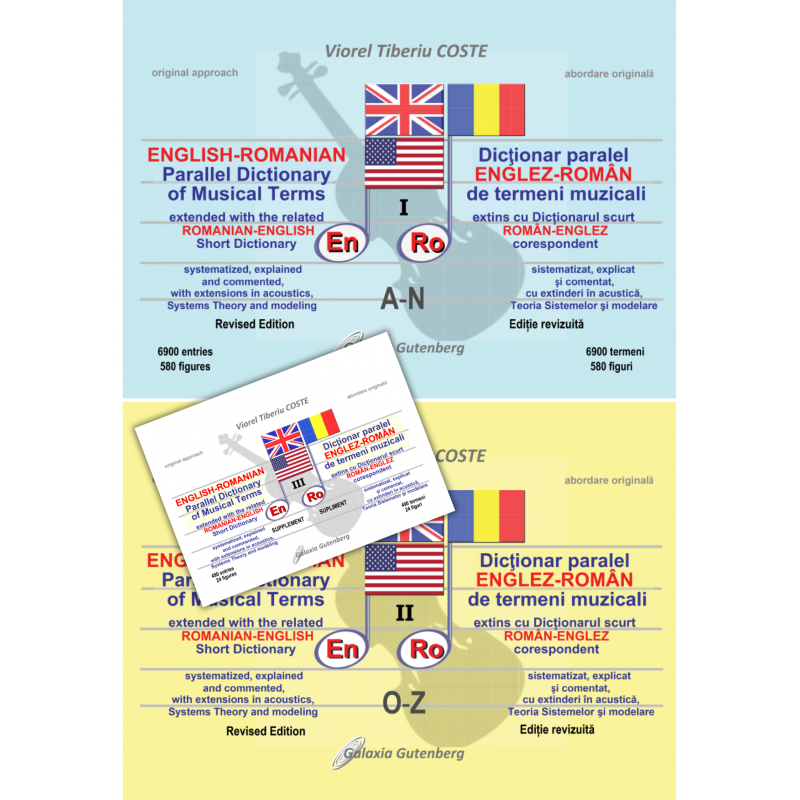
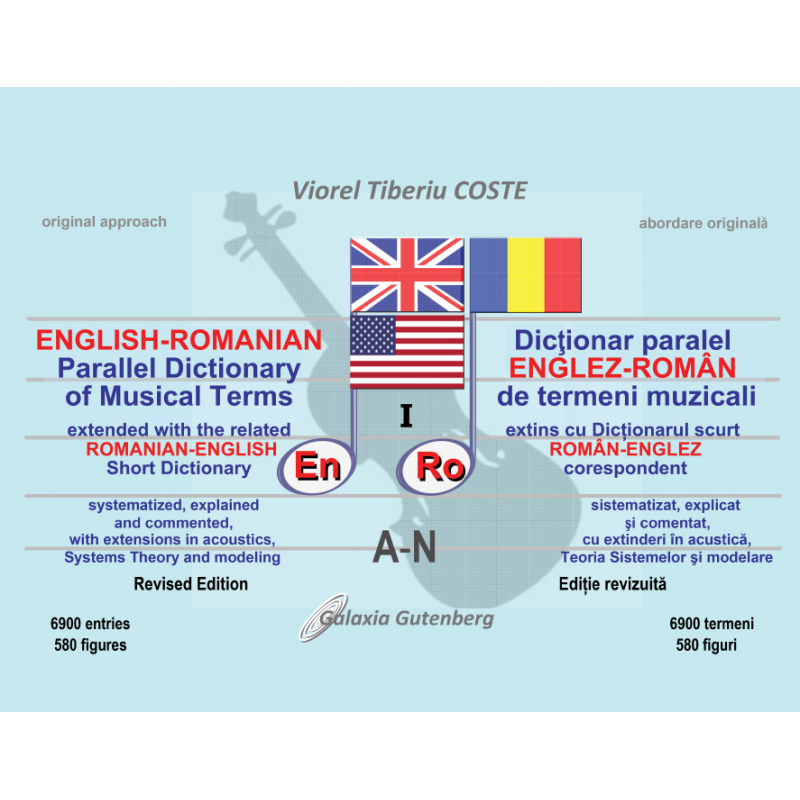
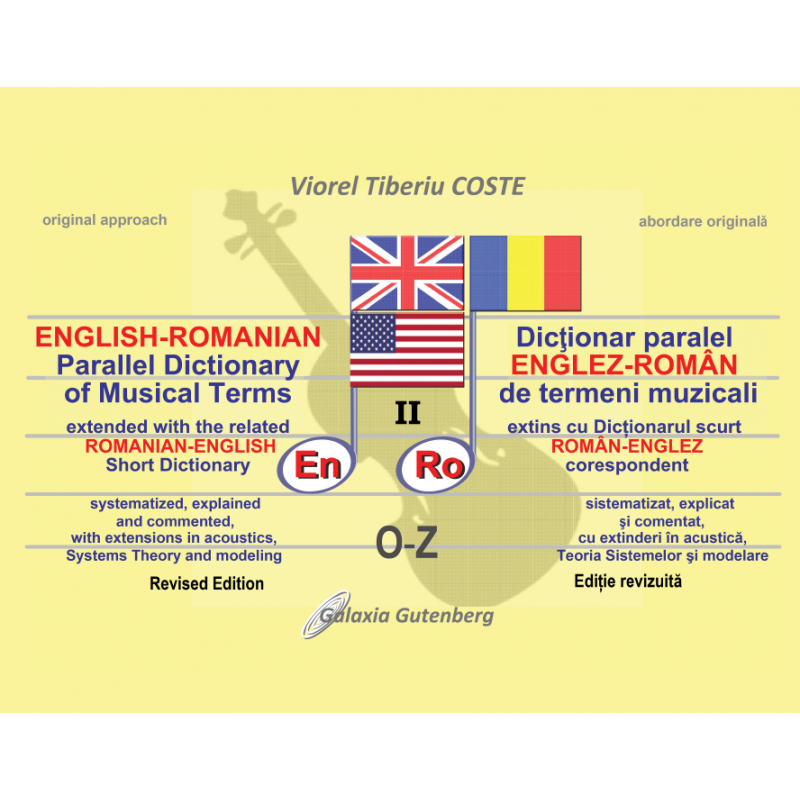
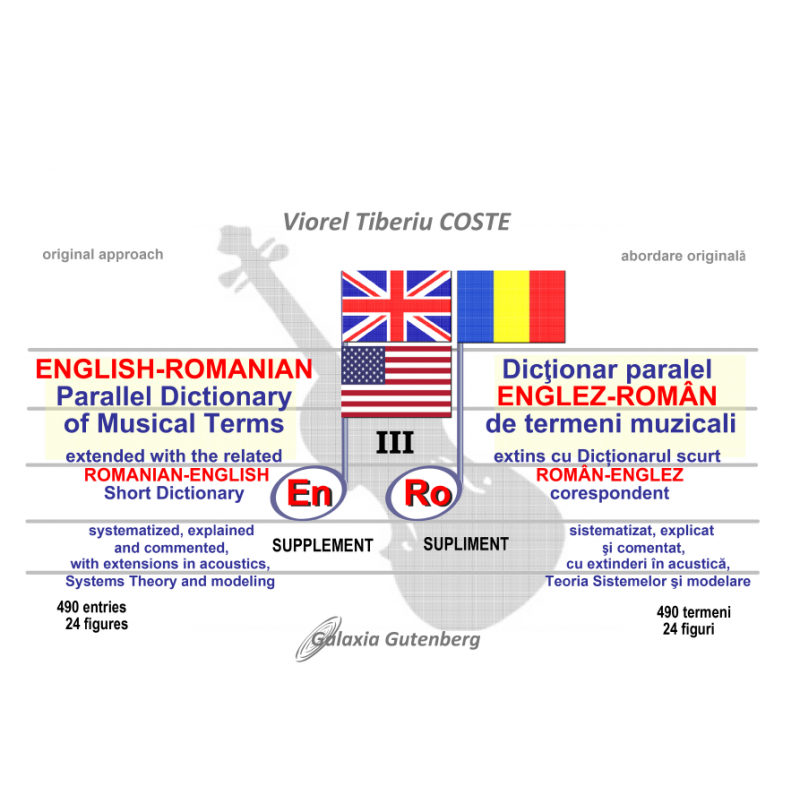


Dicționar paralel ENGLEZ-ROMÂN de termeni muzicali - Două volume(ed II, revizuită)
- Cod produs: 978-973-141-941-1
- Disponibilitate: În Stoc
360,00 Lei
| Informaţii carte | |
| Tip ediţie | Tipărită, copertă cartonată |
| Editura | Galaxia Gutenberg |
| Colecţia | În afara colecţiilor |
| Autor | Viorel Tiberiu COSTE |
| Anul apariţiei | 2025 |
| Număr de pagini | Volumul I: 896 Volumul II: 894 Supliment:174 |
| ISBN | Primul volum:978-630-6524-76-1 |Al doilea volum: 978-630-6524-77-8 | Supliment: 978-630-337-124-5 |
| Format | A4 |
Dicționar paralel ENGLEZ-ROMÂN de termeni muzicali extins cu Dicționarul scurt ROMÂN-ENGLEZ corespondent. ORIGINAL!, EXHAUSTIV!, SISTEMATIZAT!, ILUSTRAT!
Ediţia a II-a, revizuită
Cele două volume revizuite sunt însoţite acum de un al treilea volum, Suplimentul, care reunește aproximativ 490 de termeni noi, precum și 24 de figuri ce aprofundează aspectele interdisciplinare aflate la interfața muzicii cu științele exacte și artele, într-o abordare sistemică și modernă.
Dorim să menționăm că volumul al treilea (Suplimentul) este oferit gratuit la comandarea setului complet, format din cele două volume principale.
Considerăm că această ediție aduce o contribuție semnificativă la studiul și predarea muzicii, oferind o terminologie actualizată și un instrument de lucru indispensabil pentru cadrele universitare, muzicieni, cercetători și studenți deopotrivă.
______________________________
Editura „Galaxia
Gutenberg” a pregătit cititorilor săi o surpriză prin lansarea unei specii
editoriale mai rar întâlnite (respectiv un dicționar bilingv de termeni
muzicali), caracterizată de originalitate absolută, așa cum se va vedea în
continuare.
Cartea
impresionează datorită dimensiunilor cantitative (cca 1800 de pagini în format
A4, peste 6900 de termeni, peste 580 de figuri complexe executate de autor cu
talent și competență etc.), dar și prin remarcabila calitate de sinteză care îi
conferă o mai mare densitate informațională.
Acest dicționar iese din tiparul documentelor din categoria sa și capătă, pe alocuri, anvergura unui dublu tratat de muzică. Trebuie remarcate o serie de contribuții originale ale autorului: 1) ideea de dicționar bilingv „paralel” (punerea în corespondență biunivocă a două dicționare distincte: englez și român); 2) sistematizarea termenilor muzicali și corelarea multiplă a acestora; 3) tratarea exhaustivă a înrudirii (relaționării) tonalităților; 4) abordarea originală a comunicării prin muzică (sunt identificate cca. zece tipuri de „canale”): detalierea aspectelor limbajului muzical, tratarea semanticii muzicale prin prisma teoriei „cifrului semantic”, identificarea tipurilor de comunicare conotativă și deonotativă (aceasta din urmă incluzȃnd și comunicarea metaforică), o propunere de Metodă de analiză semiotică a unei lucrări muzicale; 5) analize comparative ale sistemelor muzicale dar și ale elementelor din muzică; 6) dezvoltarea unor diagrame tridimensionale pentru toate tipurile de voci ale teatrului liric; 7) o tratare exhaustivă a vocii sub cele trei aspecte polisemantice: ca sursă de sunet, ca partidă (linie melodică) și ca element cheie al rezonanței și registrației vocale; 8) gândirea unor scheme originale de prezentare, diagrame bazate pe un tipar unic, pentru genurile muzicale americane cum ar fi blues, jazz, muzica country, muzica folk, muzica rock etc., în care se evidențiază: subgenurile, originile, fuziunile și influențele acestor genuri; 9) o expunere detaliată a categoriilor de acorduri și așezarea lor în diagrame de intercorelare complexă; 10) tratarea extinsă a sistemelor de acordaj (pitagoreic, natural / Zarlino și egal temperat) și propunerea de sute de termeni noi pentru intervalele sistemului natural complet; 11) modelarea, inspirată din organizarea multi-strat OSI (Open System Interconnection) pentru: auz, văz (citirea dintr-o privire), creație componistică, interpretare (vocală, instrumentală și dirijorală). Și lista ar putea continua.
Dicționarul este
o sursă remarcabilă de informație pentru completarea materialelor didactice –
mai ales ale celor de factură grafică, folosite de către profesorii de muzică.
Prin modelările inedite ale fenomenelor muzicale, dicționarul poate fi plasat
în centrul spațiului interdisciplinarității și poate crea noi moduri de
abordare a teoriei muzicii în care să fie implicați și specialiști ai altor
domenii de activitate.
Dicționarul
este destinat: traducătorilor autorizați din limba engleză în limba română și
viceversa, muzicologilor și cercetătorilor din domeniul muzicii, profesorilor
de muzică, studenților de la academiile de muzică, elevilor din liceele de artă
cu profil de muzică, muzicienilor practicanți, amatorilor de muzică având
cunostințe în domeniul muzical, dar și matematicienilor, fizicienilor, cercetătorilor
în audiologie și vocologie, inginerilor etc. care vor înțelege muzica și de pe
pozițiile propriilor meserii și, nu în ultimul rând, oricărei persoane care
simte nevoia unei incursiuni în domeniul muzicii teoretice pentru a-și lărgi
sfera culturii generale individuale.
| Informaţii carte | |
| Tip ediţie | Tipărită, copertă cartonată |
| Editura | Galaxia Gutenberg |
| Colecţia | În afara colecţiilor |
| Autor | Viorel Tiberiu COSTE |
| Anul apariţiei | 2025 |
| Număr de pagini | Volumul I: 896 Volumul II: 894 Supliment:174 |
| ISBN | Primul volum:978-630-6524-76-1 |Al doilea volum: 978-630-6524-77-8 | Supliment: 978-630-337-124-5 |
| Format | A4 |
Cele mai vândute cărți




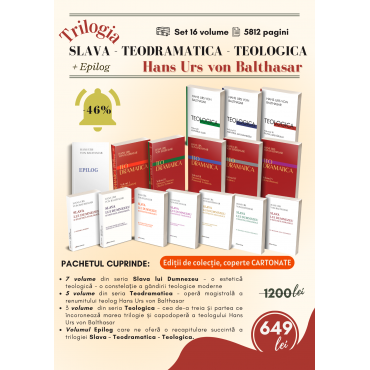
TRILOGIA Slava ● Teodramatica ● Teologica - Hans Urs von Balthasar │ cu copertă cartonată
649,00 Lei 1.200,00 Lei


Cele mai căutate de cititori




Deschidem inimile și mințile


Vezi cărțile adăugate recent



Crăciun cu micuţa Tereza. Scenetă de crăciun. Micul Cerşetor Dumnezeiesc din ziua de Crăciun
10,00 Lei 15,00 Lei

În mijlocul mulţimilor - Viaţa religioasă a Frăţiorilor Părintelui de Foucauld -
16,00 Lei 33,00 Lei

Pacea va fi ultimul cuvânt pe pământ
4,00 Lei 9,00 Lei


Cele trei conversiuni şi cele trei căi. Prelegeri pentru exerciţii spirituale
9,00 Lei 14,00 Lei