

Noul Testament, traducere Ioan Bălan
- Cod produs: 978-630-337-191-7
- Disponibilitate: În Stoc
150,00 Lei
| Informaţii carte | |
| Tip ediţie | cartonată |
| Editura | Galaxia Gutenberg |
| Colecţia | Restitutio |
| Autor | Fer. Ioan Bălan |
| Anul apariţiei | 2026 |
| Număr de pagini | 808 |
| ISBN | 978-630-337-191-7 |
| Format | 16x23 |
Noul Testament, traducere Ioan Bălan (ediție anastatică)
Orice ediție
anastatică a unei cărți de referință este, mai mult decât un eveniment livresc
sau omagial, o reînviere spirituală, o readucere în prim-planul memoriei
culturale și colective a unei valori perene. Când cartea întrupează valori
spirituale împărtășite de aproape toată umanitatea și de o întreagă națiune sau
comunitate de credință precum Biserica Catolică, ediția anastatică se înalță ca
un monument, celebrând nu doar înțelepciunea lumii trecute și pe înțelepții ei,
ci prezentul spiritual al celor care iubesc și caută fervent adevărul și, potențial,
viitorul inefabil, pentru multe generații, al gândurilor celor mai adânci și al
faptelor celor mai înalte de care este capabil omul. Un astfel de reper este
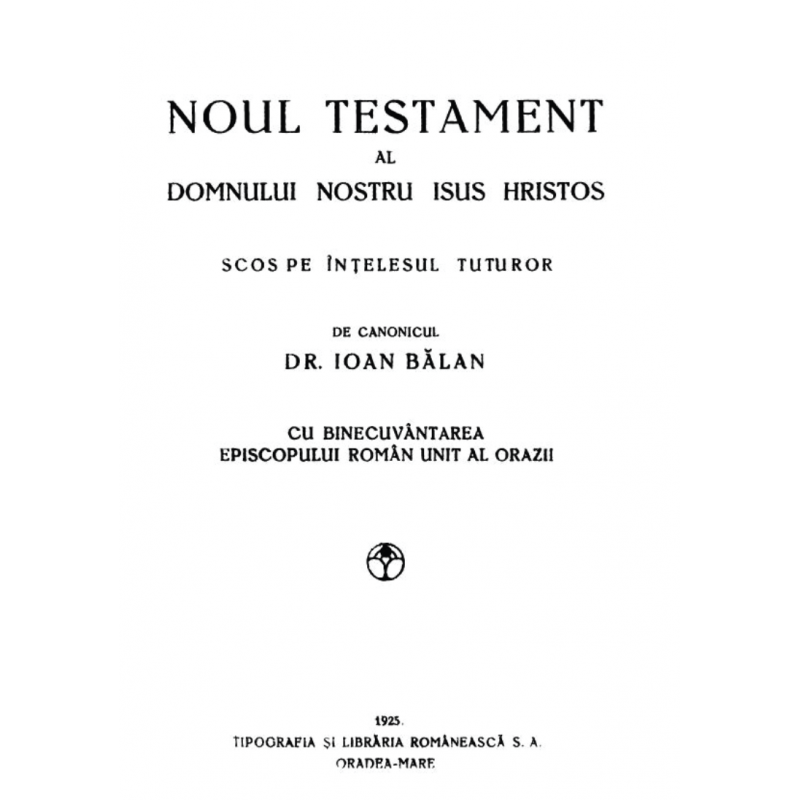
traducerea Noul Testament al Domnului nostru Isus Hristos pe înțelesul
tuturor, a Fericitului Martir și Arhiereu al Lugojului, Dr. Ioan Bălan
(1880-1959).
Publicată pentru prima
dată în anul 1925 la Tipografia și Librăria Românească S. A., Oradea-Mare, cu
binecuvântarea episcopului român unit al Oradiei, alt Fericit martir, Valeriu
Traian Frențiu, pe când era canonic capitular mitropolitan și rector al
Academiei de Teologie din Blaj, traducerea a mai cunoscut alte două ediții:
prima, după 13 ani de la întâia publicare, în anul 1938, cu un Cuvânt
înainte aparținând Arhiepiscopului Mitropolit de Alba Iulia și Făgăraș, Dr.
Alexandru Nicolescu (Blaj, 22 Noiembrie 1937) era o reproducere fidelă a celei
din 1925; a doua, publicată după 70 de ani, în 1995, la dorința Eminenței Sale
Alexandru Cardinal Todea, cu editarea și corectura Pr. Ioan Vasile Botiza,
profesor de teologie biblică la Institutul Teologic „Sf. Ioan Evanghelistul”
din Cluj și cu binecuvântarea episcopului de Oradea, Vasile Hossu, beneficia de
îmbunătățiri generale ale textului traducerii și aducerea la zi a notelor explicative
bogate și a limbajului.
Traducerea nu a rămas
neremarcată internațional, așa încât, în numărul 145 din anul 1927 al revistei
de studii bizantine Échos d’Orient, reputatul orientalist, asumpționistul
Sévérien Salaville publica o notă bibliografică (pp. 127-128) în care saluta
lucrarea și, în special, notele exegetice bogate și competente și propunea
sugestii pentru îmbunătățirea preciziei textuale în conformitate cu textul grec
pentru edițiile viitoare.
Totuși, din cauza
circumstanțelor istorice generate de arestarea episcopilor greco-catolici în
1948 și persecutarea Bisericii Unite prin scoaterea în afara legii de către
regimul comunist, traducerea Bălan nu a urcat nici pe firmamentul culturii
românești, nici pe cel al propriei Biserici, din motive evidente. Argument
suficient pentru publicarea unei ediții anastatice a traducerii, dar sunt multe
altele atât istorice și omagiale, cât și spirituale și cultural științifice,
fără a le exclude pe cele de natură practică. Iată câteva dintre ele:
·
Anul
acesta se împlinesc 100 de ani de la prima publicare a traducerii și 145 de ani
de la nașterea episcopului Bălan. Între timp, prin harul lui Dumnezeu și
vicisitudinile istoriei, episcopul Lugojului este celebrat cu titlul de Fericit
martir în calendarul Bisericii Române Unite cu Roma, Greco-catolice. Este un
privilegiu acela de a atinge relicvele sau un veșmânt sfințit cu sânge de
martir, dar este, de asemenea, o imensă binecuvântare a răsfoi paginile spălate
de sudoarea muncii lui.
·
Traducerea
este într-o limbă română frumoasă, curgătoare, cu neologisme blânde, potrivite
unui text biblic, și cu mireasma de biserică veche a arhaismelor potrivite
numai unui evangheliar. Notele exegetice și explicative deosebit de bogate sunt
în mare parte valide din punct de vedere biblic și astăzi, iar aparatul critic
facilitează accesul la nuanțele căutate și la detalii teologico-biblice de
nișă. Este atât un text inteligibil și accesibil pentru cititorul fără studii
teologice cât și o bună bază pentru studiile biblice mai aprofundate.
·
Lucrarea
Fericitului Ioan Bălan al Lugojului nu este suspendată în spațiul individual al
unei culturi teologice de excepție, ci este adânc ancorată în marea cultură a
literaturii bisericești românești și în tradiția intelectuală a Bisericii
Blajului: ea pornește de la textul Noului Testament din Biblia de la Blaj
(1795) a lui Samuil Micu, adăugând o intensă muncă de îndreptare, de conformare
cu textul grec, de facilitare a accesului cititorului prin folosirea limbii
române contemporane, fără a mai pune la socoteală abundența de explicații și bogatul
aparat critic. De aceea, traducerea poate deveni, după o ulterioară diortosire,
versiunea reprezentativă în cultura română și text canonic al Noului Testament
pentru Biserica Română Unită cu Roma, Greco-Catolică și, de ce nu, vestirea
bună de pe paginile sacre ale Evangheliarelor ei.
‒ pr. Gabriel Marian Marincaș
| Informaţii carte | |
| Tip ediţie | cartonată |
| Editura | Galaxia Gutenberg |
| Colecţia | Restitutio |
| Autor | Fer. Ioan Bălan |
| Anul apariţiei | 2026 |
| Număr de pagini | 808 |
| ISBN | 978-630-337-191-7 |
| Format | 16x23 |
Cele mai vândute cărți




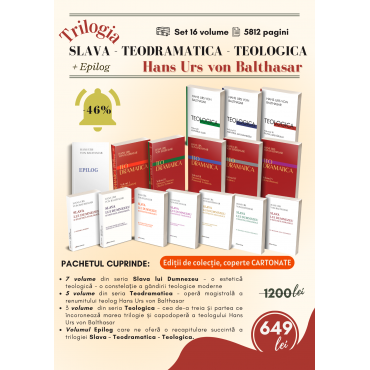
TRILOGIA Slava ● Teodramatica ● Teologica - Hans Urs von Balthasar │ cu copertă cartonată
649,00 Lei 1.200,00 Lei


Cele mai căutate de cititori




Deschidem inimile și mințile


Vezi cărțile adăugate recent



Crăciun cu micuţa Tereza. Scenetă de crăciun. Micul Cerşetor Dumnezeiesc din ziua de Crăciun
10,00 Lei 15,00 Lei

În mijlocul mulţimilor - Viaţa religioasă a Frăţiorilor Părintelui de Foucauld -
16,00 Lei 33,00 Lei

Pacea va fi ultimul cuvânt pe pământ
4,00 Lei 9,00 Lei


Cele trei conversiuni şi cele trei căi. Prelegeri pentru exerciţii spirituale
9,00 Lei 14,00 Lei